Local terms for this counter
casa de cambio · colmado · bodega · tienda de barrio · lotérica · agente de remesas · correspondente bancário
Across Latin America the neighbourhood counter has always been the financial system for most households — the casa de cambio, the colmado, the lotérica, the agente.
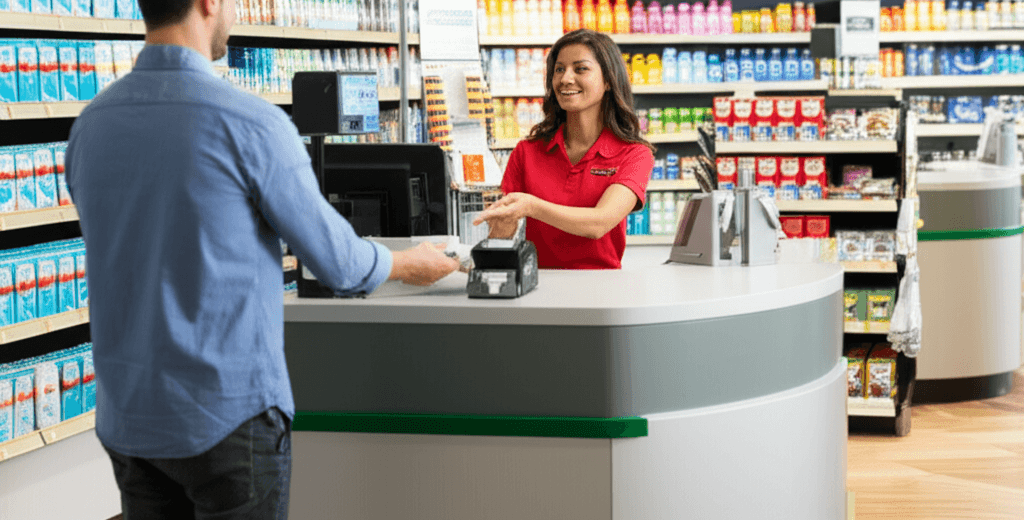
$500.00
Counter order · Latin America
Latin America is the region where the case for a retail crypto counter is easiest to make, because the counter already exists and already does most of the job. Currency exchange is normal. Cash is dominant. Remittance is routine. And a large share of the population has a practical, unsentimental relationship with the US dollar that long predates crypto.
What has changed is the rail. Dollar stablecoins now do, faster and cheaper, what informal dollar markets used to do slowly and expensively — and adoption across the region has been driven by ordinary households protecting purchasing power rather than by speculation.
Anytime Capital's retail counter is live in the United States. International partner locations are onboarded market by market as local licensing allows, so the first conversation is always about what is possible where your store actually is.
The local picture
The format has a different name in every market and does the same job in all of them. This is the version that applies here.
casa de cambio · colmado · bodega · tienda de barrio · lotérica · agente de remesas · correspondente bancário
Currency exchange houses, neighbourhood grocers, remittance agencies, lottery and payment agents, pharmacies acting as payment points.
United States, Spain, intra-regional, Italy — where the money moves, and why stablecoins matter at this counter.
Spanish, Portuguese. Serving a customer in their own language is the single biggest advantage a counter has over an app.
The arithmetic
You keep a share of every order. Bigger order, bigger share. The examples below use 1% to 3% — your own rate is in your agreement.
| At the counter | Order size | Store keeps (low) | Store keeps (high) |
|---|---|---|---|
| A customer cashes a check and puts part of it into Bitcoin | $200 | $2.00 | $6.00 |
| A regular buys USDT to send to family overseas | $500 | $5.00 | $15.00 |
| A customer sells crypto and takes the cash | $1,000 | $10.00 | $30.00 |
| A small business owner buys on payday, every other week | $2,500 | $25.00 | $75.00 |
| One larger order, the kind an ATM's daily cap refuses | $10,000 | $100.00 | $300.00 |
The figures above are worked examples, not projected or guaranteed earnings. They show how the arithmetic works on a given order size at an illustrative revenue-share range. Your actual rate is set in your agent agreement, and what any individual store earns depends on its foot traffic, its neighbourhood, its hours and how many customers it serves. Anytime Capital does not promise any level of income.
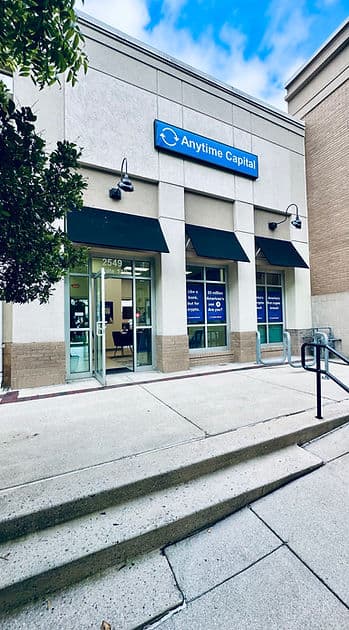

Anytime Capital runs its own branches in Atlanta and Miami. Partner stores run the same counter service.
In economies that have lived through currency depreciation, capital controls or both, holding value in dollars is not an investment strategy — it is household financial management. Latin American families have done it for generations through informal exchange, dollar savings and cash under the mattress.
A dollar stablecoin does the same thing in a form that can be sent, split and stored without a physical note. That is why adoption in the region has been led by savings and transfers rather than trading, and why the demand shows up at counters rather than on exchanges.
For a store, that means the customer conversation is short. People are not being introduced to a concept; they are being offered a better version of something they already do.
Regulatory regimes across the region vary widely and are changing quickly — some markets have virtual asset service provider registration, others are still forming a framework. Availability is determined market by market.
Anytime Capital's retail counter is live in the United States. International partner locations are onboarded market by market as local licensing allows, so the first conversation is always about what is possible where your store actually is.
Anytime Capital is a registered US money services business and operates its own branches in Atlanta and Miami. The retail program extends that same platform to partner counters — which is why availability follows licensing rather than ambition, and why the first conversation about any international market is a straight one.
An employee signs in to the retail platform in a browser, runs a one-to-two minute identity verification for a first-time customer, places the order at a live price and takes the payment at the counter. Returning customers skip the verification entirely.
The store never holds cryptocurrency, never controls a private key and never funds a float. There is no equipment to buy, lease or install.
The customer receives the asset to a wallet they control, with the delivery recorded on a public blockchain — which is a stronger receipt than most counter products anywhere in the world can offer.
Markets in this region
Each market has its own counter format, its own corridors and its own regulatory position.
Adoption is broad across the region, with particularly strong household stablecoin use in economies that have experienced significant currency depreciation. Availability for a partner counter is a separate question from adoption and is determined market by market as licensing allows.
Operationally it is very close, which is why the model maps so well onto the format. The customer, the counter and the identification step are the same; the asset is different.
Anytime Capital's retail counter is live in the United States. International partner locations are onboarded market by market as local licensing allows, so the first conversation is always about what is possible where your store actually is. We will tell you plainly what is and is not possible where you are rather than taking you through an onboarding that cannot finish.
In the United States, a store acting as a serving location does not need its own money services business registration — Anytime Capital holds it. Outside the United States the answer depends entirely on the local regime, which is why availability is assessed market by market.
An employee signs in, verifies the customer once, places the order and takes the payment at the counter. There is no machine to install, no crypto for the store to hold and no float to fund.
Tell us where your counter is and what your customers are asking for. We will be straight with you about what is possible in your market today.